Showing posts with label renewal. Show all posts

Sunday, September 21, 2025

Fall Equinox: Abundance, Gratitude, and Giving in Times of Trouble

Fall Equinox: Abundance, Gratitude, and Giving in Times of Trouble

At the Autumn Equinox, the Earth pauses. Day and night meet as equals, and for a brief moment, balance reigns. This turning point in the year invites us to do the same: to pause, reflect, and ask ourselves what we've gathered and what we're ready to give.

And I know that for many of us, finding balance, or even harmony, feels particularly challenging right now. The world feels heavy with uncertainty and fear. You may be wondering how to think about abundance and offering when your own reserves are depleted, when the news leaves you anxious, when caring for others has left you running on empty.

And yet, Fall Equinox is the season of harvest, not just of crops, but of experiences, lessons, and transformations. It's a time to honor abundance and to consider how that abundance might overflow into the lives of others. Sometimes we've harvested resilience, the ability to keep showing up, or simply having survived. These too are offerings.

What have you cultivated this year, emotionally, spiritually, creatively, that is now ripe for sharing?

This reflection is not about productivity or achievement. It's about presence. In a world that demands speed and performance, presence is radical. In times of chaos, presence becomes even more radical and necessary. It's about noticing what has grown in the quiet corners of your life. It might feel like weeds. It might not feel like ripening grain. Maybe it's a deeper sense of compassion. Maybe it's a renewed connection to nature. Maybe it's a story you've carried that's ready to be told. Whatever it is, this is the moment to hold it up and ask: What do I offer back to my community, to the Earth, to the future?

We often think of giving as an act of generosity, but it's also an act of trust. To offer something of ourselves is to believe that it might matter. And it does. Even the smallest offering: a kind word, a moment of listening, a gesture of care, can ripple outward in ways we may never see.

As you reflect, consider the balance, the harmony in your own life. Have you made space for both action and rest? For both giving and receiving? For both joy and sorrow? Balance is not a static state: it's a dance. Harmony requires attention, adjustment, and sometimes surrender. The equinox reminds us that this kind of balance is possible, even if fleeting. It's something to turn toward, not something to perfect.

Think back over the past year. What have you been harvesting? What moments stand out as meaningful, transformative, or tender? These are the fruits of your inner garden, worthy of celebration.

Now ask yourself: What of this am I ready to share? What part of your harvest is meant not just for you, but for others? This could be a skill, a story, a practice, or simply your presence. It could be something tangible or something intangible. The important thing is that it comes from a place of authenticity and your own abundance.

Sometimes offering the overflow means letting go. Just as trees release their leaves, we too are invited to release what no longer serves us. What habits, fears, or narratives are you ready to plow under? Maybe releasing the compulsion to recite all the world's troubles: that's a form of letting go that creates space for healing action. What can be composted into wisdom, clarity, or space for new growth?

Letting go is not always easy. It can feel like loss. But it's also a gift. It creates space for what's next. It honors the cycle of life, where endings make way for beginnings. In this season, letting go is an offering in itself.

As you sit with these questions, allow yourself to feel into them. Let them be seeds planted in the soil of your awareness. They may sprout now or later, slowly or suddenly. Trust the timing.

Here are some questions:

What spiritual gift or soul-legacy do I feel ready to offer?

What have I harvested this year, emotionally, spiritually, creatively?

How do I share my abundance with others?

You don't need to have all the answers. You don't even really need to have one answer. You only need to be willing to ask, to listen, to notice.

I'm also inviting you to honor the gifts of others. Just as you consider your own offerings, recognize what others have shared with you: a friend's support, a stranger's kindness, a teacher's wisdom, a moment of beauty in nature. These are part of the harvest too.

Gratitude is another form of offering. When we express thanks, we affirm the value of what we've received. We complete the circle. We become part of the flow.

And if you feel like you have little to offer right now, know that your presence is enough. Your willingness to reflect is enough. There is no minimum requirement for being part of the harvest. You belong here.

As we move deeper into autumn, let this reflection sit with you. Let it guide your choices, your interactions, your celebrations. Let it remind you that you are part of a larger rhythm: a rhythm of gathering, giving, releasing, and renewing.

You are the harvest. You are the offering. You are the overflow.

Blessed be this season of balance. Blessed be the gifts you carry. Blessed be the ways you choose to share them.

Mount Hood sunset, photo by Amy Beltaine

Rooted in Harvest, Open to Overflow

A Guided Meditation for Fall Equinox, 2025

Everything offered in this grounding is an invitation. Please engage in whatever way feels right to you. You are the sacred steward of your own experience:

Let's begin by arriving. Here. Now. With whatever this moment brings.

Feel the contact between your body and what holds you: the floor beneath your feet, the chair beneath your hips, the air brushing your skin.

If your body feels distant today, bring awareness to your surroundings: the quality of light, the shapes of shadow, the sounds of breath or birdsong or silence.

Now, shift your attention to the quiet ways your body is alive. Notice your heartbeat's rhythm, its persistence. Feel the breath moving in and out as presence itself. Sense the weight of your limbs, the warmth of your skin, the stillness or stirrings within.

Let your awareness settle there. You are already enough. You are already here.

Let yourself be held: by gravity, by the Earth, by the moment. Let yourself be rooted: like a tree in late summer, drawing strength from deep soil, preparing to release what has fulfilled its purpose.

Now, gently notice what's present in your body. Warmth or coolness. Tension or ease. Emotion or emptiness. Simply offer it your attention.

If anything feels overwhelming, return to your anchor: the breath, the heartbeat, the ground beneath you.

The now is enough.

In this grounded presence, I invite a question: What have you gathered this year that is ready to be shared? What you've grown through living. What you've learned through experience.

Perhaps it's wisdom earned through difficulty. Perhaps it's a joy that surprised you. Perhaps it's a story, a skill, a truth, a tenderness.

Let it rise gently in your awareness. Simply notice what wants to be offered.

Now, another question: What are you ready to release? What has served its purpose? What can be composted into wisdom?

Maybe it's a habit, a fear, a role, a story you've outgrown. Let it fall like a leaf in autumn: returned to the Earth with gratitude.

You are part of the cycle. You are part of the harvest. You are part of the offering.

Feel the balance: between holding and releasing, between gathering and giving, between being and becoming.

You are woven into the season. You are the season. You are the turning. You are the overflow.

Come back now to this moment. To the sensation of your feet or seat. To your breath. To your body. To this place. To this now.

You are here. You are rooted. You are enough.

When you're ready, begin to reawaken gently. Wiggle your fingers. Roll your shoulders. Notice the space around you. Take in a sound, a color, a presence.

Let this grounded awareness guide you.

Blessed be.


Beloved, you are whole, holy, and worthy,

Rev. Amy


This Spiritual Feast series is ©2025 Amy Beltaine, all rights reserved. You may freely reprint any blog post, website, or print resource. Simply include the following attribution, and if you print online, make the link at the end live.

Article ©2025 Amy Beltaine, all rights reserved. Reprinted with permission. This article and hundreds of others, along with other free resources are available at www.AmyBeltaine.info

Tuesday, April 29, 2025

Fires of Love, Fields of Labor: May Day Meets Workers’ Day

May Day: Honoring All the Work That Sustains Us

May 1st is a day of paradox and power. It’s Beltane, a time of fertility, fire, and renewal in Pagan traditions — when the Earth’s abundance begins to blossom, and we honor life bursting forth in all its forms. It’s also International Workers’ Day, a day of protest, remembrance, and solidarity rooted in the labor movement and the fight for dignity and justice for all who work.

These two May Days — one ancient, one modern — share more than a calendar date. Both remind us that life requires tending. That something sacred happens whenever people rise up, plant seeds, or care for one another. And both call us to remember: not all labor wears a uniform or draws a paycheck.

Ripe Figs, CC0

The Work ThatGrows the World

The Earth Works. We Work.

Beltane is a celebration of Earth’s labor — the flowering, the fruiting, the unseen toil of root and mycelium. It’s also a reminder that human survival depends on the often invisible work of care: food grown, meals cooked, children held, elders supported, bodies and communities tended.

International Workers’ Day lifts up the labor struggles of wage earners — especially those who’ve been exploited, underpaid, or made invisible by systems that value profit over people. But the meaning of “worker” cannot stop at factory gates or office doors.

Judy Heumann and Barbara Ransom pose for a photograph at TASH's Outstanding Leadership in Disability Law Symposium and Awards Dinner on July 25, 2019. Photo by Bailey Hill CC4.0

The Work of Surviving

So many people — especially disabled, queer, racialized, and impoverished folks — do not survive because they are “productive.” They survive through grit, mutual aid, community, and the sacred labor of persistence.

There is holy work in getting out of bed when the world is heavy.

There is holy work in navigating systems that weren’t built for your body or brain.

There is holy work in staying alive, in dreaming of something better, in loving what the world tells you is unlovable.

Women’s Work, Love’s Work

Historically, “women’s work” — often unpaid, often unseen — has included birthing, feeding, caregiving, cleaning, mending, nursing, comforting, teaching. This labor is the backbone of every society, yet so rarely honored.

And what about the work of loving? Loving our people, our communities, the land, the sacred, ourselves? That’s not soft. That’s revolutionary. Love is a practice. A risk. A labor.

A boxing club on a snowy day in Lower Manhattan

Try It: Expand Your Definition of Work

  • Name a kind of work you do that you’ve never been paid for. Say it aloud. Claim it. It counts.
  • Honor someone in your life who works in unseen or undervalued ways — send a note, light a candle, share their story.
  • Join in collective action — not just protests, but community meals, mutual aid drives, or spaces of joy and solidarity. The work of changing the world is shared.

Sacred Renewal, Fierce Solidarity

Beltane reminds us that renewal is possible. That growth follows long winters. That life insists.

International Workers’ Day reminds us that no one is free until all are free. That change is built through collective effort. That every kind of laborer deserves respect and rest.

So today, may we:
  • Celebrate what is blossoming
  • Refuse what is dehumanizing
  • Honor all the work — waged and unwaged, visible and invisible — that sustains life
You are whole, holy, and worthy.
Your work — all of it — matters.

Rev. Amy


Monday, April 07, 2025

Celebrating Spring, while your neighbors celebrate Easter

Family-Friendly Traditions Beyond the Bunny

Spring is a time of renewal, transformation, and celebration. For many families, especially in the U.S. and Europe, that celebration takes the form of Easter—brimming with pastel eggs, chocolate bunnies, and church services. But what if Easter isn’t part of your family’s tradition? What if you’re part of a multi-faith household, secular family, Pagan, or simply want to avoid religious holidays while still embracing the energy of the season?

Whether you’re reclaiming older traditions, creating new ones, or just trying to navigate all the marketing hype with kids who really want to dye eggs, there are beautiful, meaningful ways to honor spring that don’t require celebrating Easter.

Spring Traditions Beyond Easter

Many of the symbols associated with Easter—eggs, rabbits, chicks, sweets—aren’t Christian in origin. They reflect deeper, older human connections to the changing seasons. Here are a few examples from diverse traditions that still thrive today:

Celtic Traditions

Lighting Beltane fires (May 1) to bless livestock as they moved to summer pastures; honoring wells and springs as sacred.

Option: Light a small fire or candle to bless new beginnings. Visit a local water source and offer gratitude for renewal—maybe by floating petals, singing a song, or simply being present.

Slavic Traditions

Drowning or burning the effigy of Marzanna (spirit of winter) to welcome spring; decorating pysanky—intricate eggs with symbols of protection and fertility.

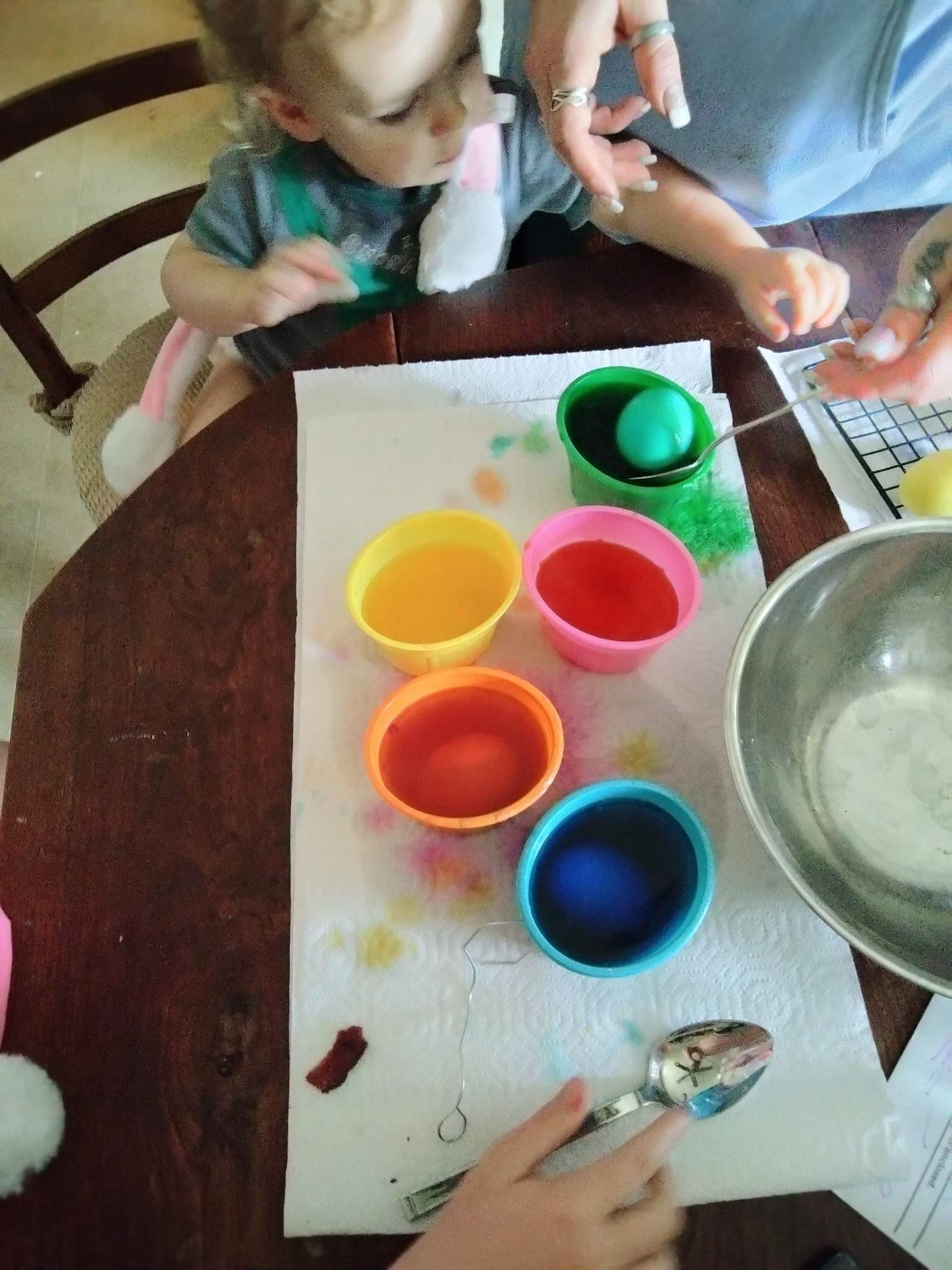
Option: Write down what you’re releasing from winter and burn or compost it. Decorate eggs using natural dyes or personal symbols—turn it into a meditative, family craft project.

Norse & Germanic Traditions

Spring blĂłts—communal feasts honoring ancestors, spirits, and deities with offerings of food and drink.

Option: Hold a spring meal and set aside a portion for ancestors or the earth. A small outdoor offering or moment of silence can be powerful.

East Asian Traditions

Qingming Festival in China honors ancestors and reconnects people with nature; hanami in Japan celebrates the brief blooming of cherry blossoms.

Option: Tend to an ancestor’s memory with stories, art, or photos. Practice mindful noticing—of blossoms, breezes, or birdsong. Let children help name and track the changes.

Indigenous (Place-Based) Traditions

Many Indigenous communities honor spring through ceremonies tied to local cycles: first thunder, maple sap runs, returning birds.

Option: Learn what natural cycles shape your region. Is it frog song, crocus blooms, or pollinator activity? You don’t need to borrow Indigenous ceremonies—just pay attention, express gratitude, and listen deeply to the land.

Ways to Celebrate Spring Without Easter

These activities are inclusive, non-religious (or adaptable), and suitable for families:

1. Egg Decorating Without Resurrection

Explore egg symbolism across cultures—fertility, life, protection—and let kids design their own meaningful symbols or just play with color. Try natural dyes (onion skins, red cabbage, turmeric) and talk about where those plants come from.

2. Seasonal Storytime

Read or invent spring-themed stories from many cultures. Feature animals waking from hibernation, plants stretching toward the sun, or kids learning from the land. Let the stories spark play, art, or imaginative outdoor time.

3. Bless Your Garden or Balcony

You don’t need a farm—blessing a single pot of herbs or planting native flowers for pollinators counts. Say a few words, sprinkle water, or sing a song together.

4. Spring Altar or Nature Table

Let kids collect signs of spring—flowers, feathers, stones, colors—and create a seasonal display. Add candles, symbols of what your family hopes to grow, or photos of loved ones.

5. Release & Renew Ritual

Write down old habits, worries, or winter energies you’re ready to release. Burn, bury, shred, or toss them into moving water (responsibly). Welcome new intentions for the season ahead.

6. Share a Spring Feast

Make or buy seasonal foods and share them with friends, neighbors, or your community. You could even prepare a plate just for the land, the ancestors, or whatever sacredness your family honors.

Photo by Meaghan Campbell

Spring Belongs to Everyone

You don’t need to celebrate Easter to enjoy the season’s joy and abundance. Spring invites us all into wonder, growth, and connection—with each other, with the land, and with the cycles of life.

Whether through ancestral customs, creative reinvention, or simple observation of what blooms near your home, you can create rituals that reflect your values and roots.

How do you celebrate spring in ways that feel true to you? Share your stories—we’d love to learn from each other.