Sunday, February 11, 2018

Trans-Parents

I'm married to a great guy, his son calls him "Mommy"

My spouse is completing transition. He was assigned female at birth but he's always known he was a guy. There's a period of "coming out" and a period of moving along a continuum from being perceived as a masculine woman toward being perceived as a feminine man that requires new safety management techniques.

(Before you ask, I knew before we got married, and I am still, six years later, absolutely sure that I'm the luckiest woman alive to have this person as MY person.)

Transition: a Journey, not a Sprint

Credit Creative Commons
We live in Portland Oregon. That means that there are some gender neutral bathrooms available, and it feels safer than some other towns. That hasn't changed the fact that going to the movies can be stressful - for a while I'd go into the women's restroom with him so that other women would feel more comfortable. Then there was the period where neither restroom would do and we would sprint home after a long movie, or skip the soda! Now he feels comfortable using a men's restroom in most places in Portland, though I worry...

Now a whole new challenge has shown up. When we go out to eat, we use my credit card because his still has his old name on it. When we forget, and he pays, the waitperson gets all weird when they see the old name on the card and realize they must have been "wrong" about his gender the whole time they served us. Worse, at the doctor's office, when the nurse comes out and calls the old name my husband has to decide if he will answer, thereby outing himself to all the people in the waiting room. Is that safe?

We are working on the name change, but it is tricky. You don't want to change legal name while you are in the middle of selling property, for instance. We do want to get renewed passports and we want to travel. Now that's another area of concern. Traveling... Where can we travel safely. What do we need to think about for safety when walking down the street in Phoenix Arizona? What if there is a medical emergency, will the emergency room doctors respond with care or confusion? Or most terrifying, with a refusal to treat him!

Family Transitions R Us

Our son has special dispensation to call my husband "mommy" since he's been using that name for 30 years. But will that work when we are visiting our grandchild in Arizona, sitting in a restaurant? And what will our seven-year-old grandson call us? He was a perceptive 4 year old who had a really hard time applying "grandma" to my husband, because my husband didn't seem like a grandma to him. That astute little boy settled on "Daddy's Mommy" at the time. (I've always been an easy "Grandma.") We have been trying "Granpama" but last month "Grandpa" began to win...

My own experience with his transition is worth a separate blog post... I've always had an ambiguous relationship with the way I can pass as a femme woman, and my friends who are butch risk so much more just living in the world. It is bizarre how my safety from homophobia swings from high alert when I'm with certain friends to complete unconcern when I'm "passing" as straight. Now that sense of "having it easy" in comparison to people of color, gender non-conforming folks, etc. is intensified when I realize people respond to my family as a straight family. I now have a husband, and I'm allowed into certain spaces in a way I wasn't before.
photo via flickr under the Creative Commons License

All of this Could be Easier

Our lives are really pretty awesome. And we are lucky to live in Portland, and at this time in history... And, it could be so much easier if allies and professionals were just a little more aware and attentive. And of course, I pray for those who are made uncomfortable to pay more attention to their own moral behavior and their own opportunities to learn and grow. I pray for them to spend less energy on judging and meting out judgement on others.

Meanwhile, my guy and I are living our lives, still in love, taking care of the dogs and cat, laughing together, learning together, and having adventures.


Here's a fabulous resource for Allies!

And here's my guy's blog.

Sunday, February 04, 2018

Wrestling with Ableist Language

Not Done Yet!

Graphic from UU Congregation of York
Whoops. I just realized that my business name uses ableist language. Aurgh. I just heard someone talking about using "walking together" as a sermon title. Dang. I heard from my dear friend that, yet again, our organization picked a theme that included "standing" in the title.

Did not the UU movement just embrace a commitment to undoing ableist language? But that one vote this last Summer didn't finish the project. We have years of tried and true metaphors to catch, examine, and release. We have language passed down to use from our heritage. We have habits and we have internal resistance to overcome. 

Please tell me that you are finding ways to sing, work for justice, explore, move and develop spiritually without restricting that to people who can “stand” on the side of love or “walk” a spiritual path. (The UU justice organization made the change from "Standing on the Side of Love" to "Side with Love". Jason Shelton, the author of one of our favorite hymns made the change from "Standing on the Side of Love" to "Answering the Call of Love"... we can all be inclusive too!)


Walking and Rolling on Our Own Paths

And of course... each person can and should use whatever metaphors they want in personal conversation. I’m talking about hymns in worship, the names of organizations, slogans, newsletter titles, etc. places where one is representing more than just yourself... Where a higher standard applies. (As far as individuals, your approach and choices may vary based on context-it is cool to pay attention to the words you use, but I’m not here to shame you for your choices. We all have days when it is all we can do to use words at all, much less examine them for inclusivity. The less marginalized your identity, however, the more important it is to consider the experience of he marginalized folks.)

Let me be clear here. I did not say (and would never say) you should purge such language from your vocabulary. But good grief. A major slogan that represents our justice aspect of our movement? A significant hymn? The name of a congregation? The go-to metaphor for rituals? The title of your newsletter or CUUPS group? Heck no! That’s a completely different thing from using a variety of metaphors in daily speech. We don’t need to “police” personal conversation. We DO need to be mindful of using ableist language in official and high profile contexts.

And... I find the experience of searching for new metaphors and different language to be freeing and exciting and fruitful. I personally am happy to monitor my language for body-based metaphor and make thoughtful choices. YMMV.

Updating Beloved Prayers and Songs and...

Photo from 2017 UU General Assembly
I have a prayer that has been incredibly important to me that I still want to use only referred to daughters. So I changed it to sons and daughters. Then I became aware of how that excludes gender non-confirming folks. So now I don’t use it in worship... waiting to see what might unfold there. Mary Kroener-Ekstrand, who is a DRE, mentions that "Our UU youth often use the phrase "siblings in spirit" in one song in place of sisters and brothers..." I love how our youth lead us in many of the invitations for more compassion! (See the prayer below. And your suggestions are welcome!)

I’ve been sharing a worship service called “living like a tree” based on Betsy Rose’s song “Standing like a Tree” so I talk about using that as a mantra and invite the congregations to use “living” instead of standing... and to feel how that works as a mantra...

And I’m owning the fact that I didn’t realize that my own business name was ableist until I began writing this (I've been using "Listen to Heart Song" for four years now. It is time for me to find a better, more resonant, and more inclusive business name. I welcome your suggestions!) I’m by no means perfect. But I have found that engaging these questions makes me a better person.

Diversity in our Diversity

My friend from college, Shulamit Levine-Helleman, points out that different communities (and individuals) may have different preferences. Shulamit says, "being autistic is part of who I am, not something I have, so I say I am autistic. My physical difficulties, on the other hand, are not an intrinsic part of my identity, and what is disabling is not my physical condition but the barriers placed by society, so I say I have a disability. We should respect the preferences of the individual, not impose person first language in all cases." We humans really want to be right. But which way is RIGHT? Well, that depends!

ADA
I was taught to use "differently-abled" for anyone with a disability. That was the RIGHT WAY. (You know you are about to get into trouble whenever you think you know the one "right way.") And then folks told me that they get to choose what they want to be called, and "differently-abled" isn't it! Part of this work is dealing with the messiness and evolving language. I’m still growing into using “they/them” language and “queer” since I came of age back in the days of “wimmin” and “lesbian” Lol. Alex Kapitan, Radical CopyEditor, has this fabulous comic about exactly this: https://radicalcopyeditor.com/.../person-centered-language/

Rev Maureen Killoran points out that [her grandkids] "exclusion is not from the language of "listening/hearing" but from the exclusive assumptions that shape our hearing world." and Rev Michael Tino points out, "metaphors often shape those assumptions, so we need to use them carefully."

Kristin Bakalar

Attending to Language as Transformative Prayer

Usually it is easy to switch to more inclusive language. And I love the thrill it gives me when I feel that sense of expansiveness...when I pause to notice the way I use language about bodies it invites me to be inclusive of the actual humans before me. It is a type of praying...

As a my Facebook friend Susan Christie says, "I've had similar challenges (and a sense of expansiveness) in trying to reduce images of war, violence, and fighting in my language. It's very hard!" And Rev. Tandi Rogers comments "I also get a rush when we inch toward including ourselves and other people we love."

When you pause to consider that not everyone stands to sing because you pause to say "Please rise in body and/or in spirit to join in singing...", then you are opening your awareness to those individuals who cannot or do not stand for singing. You might change the way the chairs are set up so that seated individuals can see the lyrics. Pausing to attend to the potential needs of these individuals in your words is an opening to attending to the potential needs of these individuals in your actions. 

From Words to Action

Yvonne Aburrow
Does your ritual have a way for hearing impaired folks to hear you? Does your worship circle have an opening for people who use scooters or wheelchairs? Have you checked in with your neurodivergent folks to find out if the singing bowl will be painful to them? Is there a scent-free area? Slowing down long enough to rewrite your prayer or song or speaking part can be a powerful way to turn thought into awareness and awareness into action. And ultimately, inclusive action is how we remove the disabling barriers and create the beloved community.

-------------------
The prayer I used to sing (and used to invite others to sing with me) is by Susan Arrow
Thank you mother earth
Thank you sister water
Thank you for my birth
Thank you from your daughter (which I changed to Thanks from you sons and daughters, could be "Thanks where 'ere we wander")
Thank you brother sun
Thank you air in motion
Thank you everyone
Earth air fire and ocean.

This prayer is very dependent on the Gender Binary. So I have left it behind. I would love an alternate prayer or a rewrite. (Can anyone find Susan Arrow?)

-----------
My business name has been "Listen to Heart Song". That is able-ist in that it relies on "listen" as a primary way of being in the world. For now, I'm changing it to "Reverend Amy, Spiritual Direction." If you'd like to play with a new name with me, join my facebook page at https://www.facebook.com/revamyspiritualdirection/


Sunday, January 21, 2018

Banish the Prosperity Gospel

Good Girl versus Bad Girl

One day in high school I split my slacks. Mortified I sidled into the school office, backpack drooped strategically over my exposed backside. There, I asked to use the phone so my mom could drive to school and drop off an intact pair of pants. While I was waiting for my emergency delivery the school secretary expressed her praise for my excellent choices and good thinking. Clearly I was a “good girl”, unlike the other girl, last week, who had solved a similar predicament in a different way. This “bad girl” had left school property to go to the nearby mall to get her jeans mended.

My class privilege analysis wasn’t very developed back then, but even so, I knew something was wrong with the school official’s judgement. I wasn’t “good” because I had a stay-at-home Mom. The other girl wasn’t “bad” because she handled her problem herself. Maybe her mom worked, or maybe she didn’t even have a spare pair of pants. Those were accidents of birth. These facts pointed to the privilege I enjoyed and that my dad worked to maintain.

As an adult I know that even he didn’t earn that privilege… He had it because his parents could afford to send him to college, (with the help of the government in that WWII period.)

Privilege and Options

Source: Miriam Dobson
I remember that day often. The illusion that having options means you are “good” and not having options means that you are “bad” distracts us from the truth. Of course, I have other privileges, like skin privilege and education privilege and the US of A privilege, that give me options as well. We sometimes talk about these dynamics as intersectionality. This is a topic, many topics, for other days.

Once I started paying attention I started noticing all the ways that we equate “net worth” with “worth” in our capitalistic world. There’s even a religious group called “The Family” that explicitly preaches that those who have money are blessed by God. I don’t mean they preach “thank God for what you have.” I mean, they preach that they can tell who is in God’s favor by looking at their bank account. This extremist group (look them up, their connections to U.S. Senators are truly frightening) is not alone. The prosperity gospel can be traced from Puritanism and permeates through much popular religion and Christianity. The idea is basically that God rewards your faith with success and prosperity. Poverty is a sign of lack of faith and God’s disfavor. Class dynamics and the poison of the prosperity gospel are laced throughout politics, business and white culture.

Earth-Relating UUs and Class

A handfasting ceremony at Avebury in England,
 on Beltane, 2005
Then there are the ways that these dynamics play out in UU Earth-Relating communities. I have been asking myself for a few years now: why do I notice a tension between UU congregation leadership and Earth-Relating congregants around issues of money? Is there a class difference at play between UU leadership and Earth-Relating UUs?

In the 80’s I experienced the Pagan community in Portland Oregon as predominantly white, educated, and in large part “downwardly mobile”. I use downwardly mobile to describe those who were raised with economically privileged backgrounds (landed or educated or simply “comfortable”) who have chosen to do as little wage labor as possible. That decision could be based on a rejection of the values of their parents, a desire to ‘live lightly on the earth’, or to ‘drop out of the system’, or to focus on the values in Paganism that they most resonated with.

When I moved to Ithaca, NY the Pagans I met were true to the demographics I’d observed in Portland. The book “Voices from the Pagan Census,” published in 2003, indicates that the average income for Neo-Pagans is roughly the same as the income average for the United States. The same survey found that Neo-Pagans are significantly more educated than the national average. (92.2% have more than a high school diploma versus 43% of the US population.) This information is consistent with my observations.

I’m aware that Neo-Pagan doesn’t define or encompass the many diverse Earth-Relating religions. People of color, the working poor and other communities have robust Earth-Relating faith groups among them and many Earth-Relating faith paths gather diverse adherents. However, census data no longer includes religion information (as of 1936) and I was unable to find data that would show me average income for Earth-Relating religions more broadly. So many of my perceptions are anecdotal. I’d love to learn more from others out there. Please comment if you have information to share!

Liberal Religion and Class

What I can and do offer is the observation that according to the book “One Nation Under God” published in 1993, Unitarian Universalism is ranked second only to the Jewish community in income, over 50% have a college degree and UUs are well above average in property ownership. This suggests that Earth-Relating UUs will find common ground with other UU congregants around education level but will, on average, have significantly less discretionary income. The book mentions one other thing about UUs. We have strongly been influenced by Puritan theology and the tendencies toward equating hard work with being good. The tenets of the prosperity gospel come with that. But… UU’s have the second principle: “Justice, Equity, and Compassion in Human Relations.” We have work to do here!

This suggests four things to me: 1) Earth-Relating congregants may have a role in educating congregations to be welcoming to income-diverse people. 2) We need to pay attention to how class and means are at play when we find ourselves in conflict, and when we work together to be in relationship. 3) We all have work to do to discover and break the spell of the prosperity gospel that equates means with worth, and we can do that together. And 4) As we dive into class dynamics we must be in partnership with people of color and other marginalized groups, groups who often are economically marginalized, recognizing the other dynamics of intersectionality.

I know this essay is only scratching the surface, and I don’t want us to over-focus so that we forget the impacts of intersectionality. My hope is that I am inviting us into further conversation. My hope is that we are individually and together, casting our banishing spells, in our own ways, on the curse of the prosperity gospel.

Sunday, January 14, 2018

Altaring Spaces

Evoking Sacred Space

Entrance to Ifa shrine and sacred grove of Osun, Nigeria, 
Have you ever paused to appreciate a tree? The ocean? Have you felt lucky to witness family welcoming a loved one home? Or has the pure joy of Fido reunited with his person amazed you? Have you ever wondered at the urge to build the cathedrals of Europe, or the time and effort children put into building and nurturing a fairy castle or fort? These are all ways of creating, evoking, and experiencing sacred space. These are all ways of connecting to the spiritual and the meaningful through our environment.

How do you evoke sacred space and focus ritual through mindful use of objects? Creating sacred space is an art and technique. Sacred space is created in Christianity, earth-based traditions, and modern architecture and practice. What is your plan for creating sacred space in your home, places of worship, and community?

Rituals

Some rituals create sacred space: a Chalice Lighting, a Sage or sweetgrass smudge, Ritual Words like "We are between the worlds, beyond the reach of space and time, joy and sorrow, birth and death" or " Our father, who art in heaven..." and House Blessings.

Dia de los Muertos altar, Wikimedia Commons
Sacred spaces can be created temporarily. The Tibetan Buddhist tradition of the sand-painting is one example of that. March 19th marks the Catholic celebration of St. Joseph’s Day where Catholic New Orleanians construct elaborate altars in honor of this saint. The tradition, commemorating the relief St. Joseph provided during a famine in Sicily, began in the late 1800’s when Sicilian immigrants settled in New Orleans. St. Joseph is the patron saint of social justice. Whole neighborhoods, italian, catholic, and none-of-the-above, participate. Since the altars thank St. Joseph for relieving hunger, offerings of food are essential.

Survey Your Environment

You've heard the phrase "your body is a temple"? How might your relationship to your body change if you understood it to be a sacred place, a temple, a shrine?

What sacred places exist in your home? Your workplace? Your neighborhood? In my home I have an altar with the ancestor photos on it, an eagle feather, a candle, my mother's ashes and a pine cone that looks like a rose that was given me by my son. My neighborhood has small shrines in it where people have built a whimsical or practical holders for free books.

Individual objects can carry sacred meaning. Pick an object that is in your eyesight right now. What story is in this object and what does that object need to do? What is its mission or purpose? For example I can see some clerical stoles that came to me from my grand uncle who was a minister. I have had them for years and never worn them because the symbols on the stoles are not my symbols. Today I decided that the stoles need to be used in worship. They were made for that. So I am mailing them to a colleague who can use them. Whatever object from your own life you have selected, take some time to tell its story, meaning, and purpose. Now ask yourself, "How will I be true to that purpose?"

Go Forth and Make the World Sacred

Photo: Flickr user R, Creative Commons
If you are a part of a worshiping community I invite you to consider the following:
•        How do our worship and gathering spaces present visual cues? Can people who enter that space easily answer the questions “Where am I?” and “What’s expected of me?”
•        How do our worship and gathering spaces offer respite from the outside world? Can people find a place of peace that is accessible and comfortable?
•        How do our worshiping and gathering spaces connect to our history and traditions? What symbols or design elements evoke a sense of the sacred and tell the story of the divine at work in the world?
•        How do our worshiping and gathering spaces integrate elements of nature? How can we bring the outside in and take the inside out?

Pagan Altar, Creative Commons
As you think about your personal sacred spaces and your community sacred places, I invite you to explore the following questions:
•        What might you change about your home?
•        What might you change about your work space?
•        What might you change about your worship space(s)?
•        What spaces and places might you seek out and why?
•        How might you nurture and transform your self through sacred space?
•        How might you nurture community and social justice through sacred space?
--------------------
Reverend Amy offers an "Altaring Spaces" retreat. Join her for the next one!

Monday, January 08, 2018

La Befana on Epiphany

Epiphany


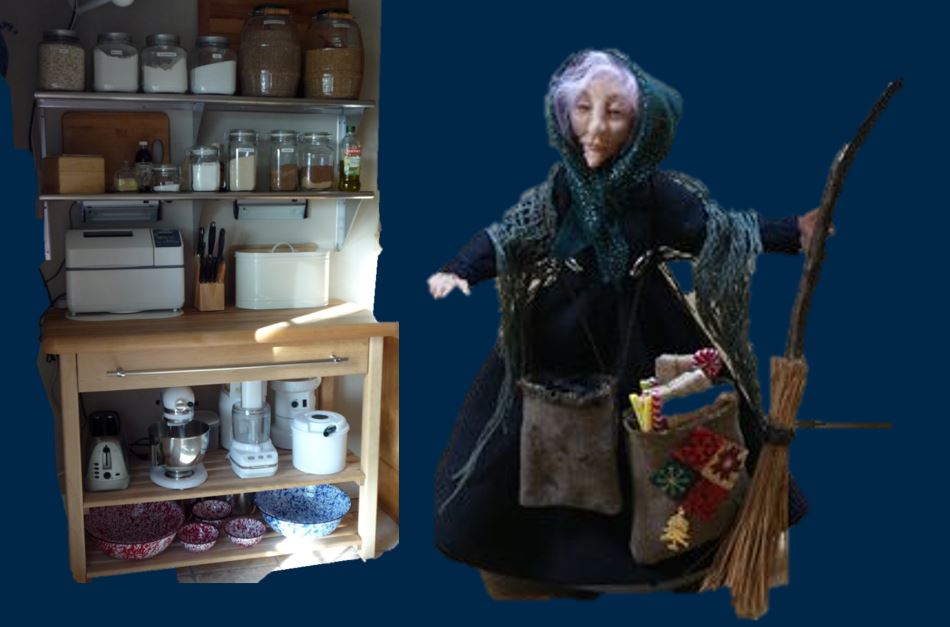
In central Europe and Italy La Befana is known as an old woman, usually ugly, who wears an old, long, skirt with colourful patches, and a scarf over her shoulders. She flies around on her broom, during the night of Epiphany, delivering small toys and sweets to the children.In most Italian regions, even adults give little presents to each other, often stockings full of chocolate.So... You now have an excuse to go get some chocolate, to celebrate Epiphany!


In the story, Befana hesitates to bring her gifts to the holy child. Perhaps she wonders if she has any gifts to give. Perhaps she wonders if her gift would really make a difference. Perhaps every time she’s tried to do something nice before it didn’t work out the way she expected. Maybe she’s grown tired of trying to make the world a better place and she has decided to focus just on her own little house. 

Sometimes it is much more satisfying to clean a house than it is to deal with the messiness of human beings. The house gets clean and stays clean. It doesn’t have a mind of its own, It isn’t ungrateful, and it doesn’t undo everything you worked for in one temper tantrum or one election.
But something happened that made her change her mind. Something made her scurry about doing the things she was good at. Bringing the gifts that only Befana could provide: Her baked goods, her huggable self, her broom.
Three Kings Parade sponsored by El Museo Del Barrio, NYC
Photo Credit: Walks of New York

Perhaps it was the invitation? Perhaps it was the hug? Perhaps it was the joy of the parade? Perhaps it was the hope for a child who would bring more love into the world.
What would it take to get you out of your house? Out of your routine? Out of your safe little cocoon? Out of your projects that seem so very pressing, important, and do-able?

From Birthday Party to Funeral


Things went as planned for the astronomer priests who showed up on their camels at the right time with their expensive gifts. On finding him, the wise men gave baby Jesus three gifts: gold, frankincense, and myrrh. Then they skedaddled. Herod resorted to killing all the young children in Judea, an act called the Massacre of the Innocents, Jesus and his family had, however, already escaped to Egypt.
Angelo Visconti


Here the biblical account ends. I imagine that this is the point in the story where Befanna shows up. After the wise men. After the holy family escapes. After Herod’s army destroys all the new born babies in Judea. I wonder what she thought as she looked at the gifts she had brought and then looked at the bereaved mothers and fathers and sisters and brothers.She thought she was coming to a birthday party and instead she arrived at a funeral. 


2017 Breaks the Mass Shooting Record


Slain in Sutherland Springs, TX church shooting
 26 dead, 20 injured, Nov. 2017
I suspect a lot of us felt that way last year. The year of mass shootings. The year of unprecedented political polarization. The year of rolled back environmental protections. The year of renewed fears of nuclear attack. The year of natural disasters. It was like getting ready for a party and discovering you were at a funeral.

These problems are systemic and connected but we have a tendency to put responsibility for this plague of violence, destruction and suffering at the feet of individuals. Just like la befana looking to the one saviour...If the problems were caused by individuals, if it was about one deranged person with a gun, then we could solve them by having disaster preparedness drills at school/work and learn what to do when there is a shooter in the building. Instead it is about domestic violence, toxic masculinity, us and them and rape culture. (And more)

If the problems were caused by individuals, if it was just that this one elected official is not to our liking we could make fun of that elected official. Instead it is us. We have lost faith in the electoral process. If we dont work very closely, and stick together we will lose access. What hurts some of us hurts us all.. gerrymandering, disenfranchisement, white supremacy, a strategy of divide-and -conquer and a deeply divided country of people who live in ideological bubbles. (And more)


We are All Connected


If only the individual is responsible it feels like it’s enough to recycle. Our frustration tempts us to turn on one another, like when we make fun of teenagers who take long showers during a drought. Instead the blame lies with poor laws and greed, racism and classism. The destruction of our earth stems from the doctrine of dominion over the earth and disconnection from the land, water, and air. 

Our dis-ease is disconnection from our tribes, our communities, our families, our family of humanity and our family of all life. This connection can be called religion, especially if you remember the root derivation of that word. Re-ligio. Ligio is the same word that avenue us ligament… connection. Re-connection.


Photo credit: Upliftconnect.com
If we blame the broken individual, then we are absolved from responsibility to be in community. However, if the problem is that we live in a damaged system, there’s nowhere to hide and so much work to do. We are all part of the system

There is no fast fix. What we need, What we really need is to find ways to connect with one another in kindness and bridge the isolation and disconnection. These men with guns are canaries in this poisoned coal mine. If we pay attention, we can take action to heal that which must be healed.


Hope is Like the Sun


Without the ability to dream, human beings quickly become psychotic. Without hope, we cannot function. Not having a “life dream” is debilitating. Without a dream, living is only going through the motions. Without love, real, personal, connection, human beings shrivel up and die. Like a baby monkey hugging a wire frame, seeking a mother’s love, we all become broken.

In the recent star wars movie, vice-admiral Amilyn Holdo reminded the pilot Poe of a lesson Princess Leia taught her: “Hope is like the sun. If you only believe in it when you can see it, you'll never make it through the night.”


Epiphany is like the sun rising in your own soul. As long as it shines there, we can keep hope alive.

When, like Frodo–the-ringbearer, we despair of our task, we must take Gandalf’s advice.

When we feel that the task before us is too dificult, Gandalf says - "So do all who live to see such times, but that is not for them to decide. All we have to decide is what to do with the time that is given to us."


Redemption


Is there any Redemption to be had from the tragedies of 2017? Perhaps the redemption is our epiphany that something must be done. Perhaps the redemption is that new dawn, where we wake up and take action…

I see redemption in the #Indivisible movement, the #metoo movement, the #blacklivesmatter movement #resist and Oceti Sakowin Camp as the water protectors keep on working for the land they love.

What is your gift? What do you have to share? What kindness? Is it gold? That’s good. Is it cookies? That’s good too. I checked my pockets, I don’t have any frankincense or myrrh… I can do hugs. Hugs are very good, so is a listening ear, and most of all, you can stay out of your denial, away from the routine, and pay attention to the people around you. Know the people around you. Be involved. You have no idea what one small act of kindness may do. Kindness connects us to each other.


Save What We Love


We are all connected. We are all responsible, individually and collectively. Let us us reach into the mystic truths, the roots of love and relationship. I'm a big fan of the star wars movies and love the idea of the force -the flow of life between, among and around us, but the most recent movie gave me my favorite quote ever. Rose is a mechanic, not a princess, not a jedi, not a hotshot pilot. She knocks Finn's flyer off course to stop Finn from sacrificing himself in battle and when he asks why she says:

“This is how we’re gonna win. Not fighting what we hate, but saving what we love.”


by Isabella Centofanti Alexander
from the book "The Night of La Befana"

Sunday, December 31, 2017

Toll for the Old Year, Ring in the New

When is New Years?

Free to use, by Funnyexpo
It is an accident of history that we mark the change of the year on January 1 instead of in the Fall as most earth-relating cultures do. I resonated deeply with the many observances that fall in the Halloween season, but it is nice to make something meaningful of the New Year observances going on all around us.

Bells!

For the New Years Eve service at the UU congregation in Amado AZ I was asked to create a bell ceremony. So off I went, down the rabbit hole of bell meaning and lore. Bells are sounded to signal the beginning or end of class, an emergency, a wake-up call. In medieval days the town crier rang a bell for attention before reciting the news. Most congregations I visit use a bell to signal the beginning of the service and often a bell at the end of the service or after every period of silence. Some congregations use a Tibetan singing bowl. Some use a chime. Some a classic carillon-shaped bell.

Courtesy https://bevinbells.com/
About that classic bell shape: One writer suggests that in Christian tradition (or possibly pre-christian traditions) the empty dome of the bell represents the vault of heaven, its lip represents the horizon of the earth, and the clapper represents the power of word and voice while the emptiness within the dome represents all that is contained between the heaven and the earth. With this respect, the ringing of the bell represents a Divine message being created in the heaven and delivered to the earth in order to eliminate all evils.

Courtesy http://www.verdin.com
If you've ever lived near a Catholic church you know that the bells are ringing all the time. Every bell has a purpose and meaning. Every bell is ringing out a message about church teachings. The incarnation is celebrated by the Angelus bell which is rung at 6 pm. The bell is rung in a specific pattern. Traditionally a Hail Mary is said with the ringing of the bell. The form of the Angelus prayer was standardized by the 17th century — the triple stroke repeated three times, with a pause between each set of three (a total of nine strokes), sometimes followed by a longer peal.

(I've included the script, below, for the "toll out the old, ring in the new" ritual used at the Amado congregation Dec. 31, 2017.)

The Incarnation

The incarnation. The incarnation is the way that the divine manifests on earth. In Catholic tradition the focus is on Jesus the Christ and how God came to earth, in the person of Jesus, through the gift of Mary. Christian doctrine is that the church itself is the body of Christ. If Christ is god on earth, and the church is made up of those who are part of the congregations, then the people are the body of Christ… Not a big leap to the teaching of Unitarian Universalism – WE are the hands and feet of God. We are the heart and lungs, we are the eyeballs, throat, ears and even the Achilles’ tendon of god, all the parts, even the ones that are often overlooked, are parts of the divine body. The queer, disabled, rich, unhoused, immigrant, elder, type A, messy, imperfect folks are part of this body. We are how God acts on earth. Unitarian Universalism looks for the ways that we are manifesting divine love in our own living.

We are the ones we’ve been waiting for. We are the bells tolling for the past and ringing in the future. We are the result of all that has gone before. Others have been building the body of divine love on earth. Others have been doing the work of justice. Others have been creating beauty and joy. Others have cared for the children cooked the meals and held back the forces of despair and destruction. As they pass out of this life, they pass on a legacy. Sacred compost. The cycle of life that gives nourishment.

Honoring the Ancestors

Miguel and his great grandmother in the Pixar movie “Coco”
I invite you to meditate on honoring the gifts of your ancestors. I invite you to identify an ancestor of blood, an ancestor of spirit from history, or an ancestor from fiction who you want to claim inspiration from. I struggled with one of my ancestors… Grandmother Warren - hard to love but gave determination.

I have created an ancestor altar at my home on the hearth. It has photos of my mom and grandparents, it has a hawk feather from the location where my ministers chapter usually meets, to remind me of past colleagues. It has a monk/spirit person candle holder to remind me of the Earth-relating, justice-seeking, spiritual torchbearers of the past. It has a small fuzzy cheetah figure in remembrance of my best friend.

What might you do to help you remember the gifts that have been passed down to you. The legacy that you carry on? Some people write a note and keep it in their wallet or hang some photos on their wall, some people play certain pieces of music or enjoy certain foods, some take up a craft, like knitting. What will you do?

Honoring the future

WE are the hands and feet of God. We are how God acts on earth. Look now for the ways that we are manifesting divine love in our own living.

We are the ones we’ve been waiting for. We are the bells tolling for the past and ringing in the future. How have we been building the body of divine love on earth? How do we do the work of justice? How shall we create beauty and joy? How have we cared for the children cooked the meals and held back the forces of despair and destruction? What is your legacy already? Sacred compost.

This is your invitation to imagine what one action you will take - to honor and give gifts to your descendants. How will we use the gifts we have been given? What do you want this year’s enlivening compost to be? What will we offer in thanksgiving, that does honor to our ancestors and commitment to descendants. What action will you take. What is the thing that only you can do to make a difference, no matter how small? Pick one. You need to be able to come back to this one small thing tomorrow and tomorrow and tomorrow for all of 2018.

Ritual: Tolling out 2017

(Credit to Dana Topping of UUCGV, Amado who co-created this ritual.) On this last day of the year 2017 we wish to commemorate those who have passed away, to remember how their lives have touched ours, to feel compassion for how deep, yet how fragile our human bonds. Our ritual this morning will be to name those for remembrance followed by the tolling of a bell to carry our thoughts out to wherever souls congregate.

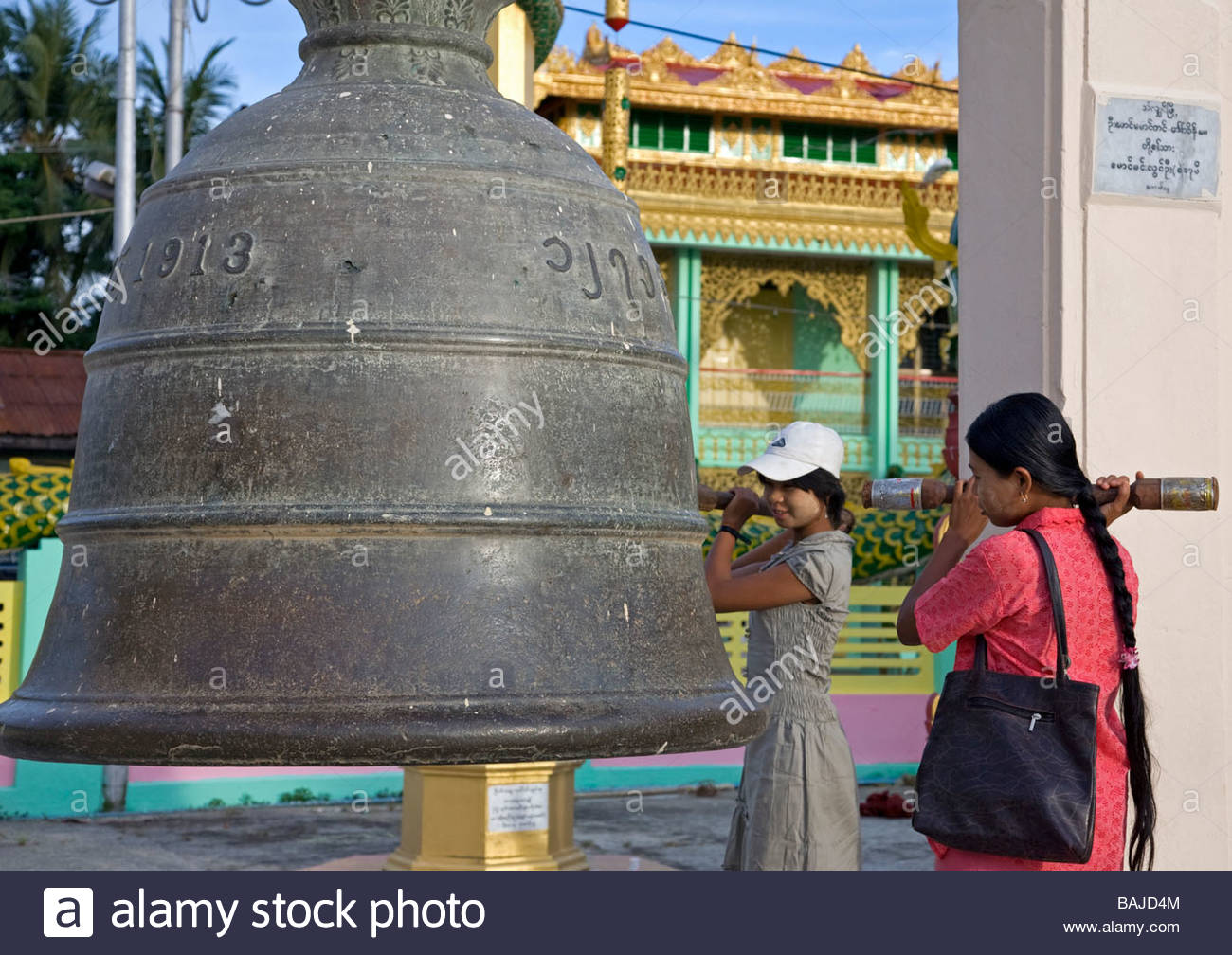
Women praying in front of the sacred bell.
Botatoung Paya. Yangon. Myanmar
Contributor: Pep Roig / Alamy Stock Photo
(1) The first remembrance is for prominent people. There are so many gone this year - I have chosen a few.

(names)

BLESSED BE THESE WE HOLD IN OUR HEART MEMORY. 3 BELLS

(2) Our second remembrance is for those in our congregation who have passed away this year:

(Names)

BLESSED BE THESE WE HOLD IN OUR HEART MEMORY. 3 BELLS

(3) Our third remembrance is for your friends and family and people important to you. Please call out these names that we all might hear and know them.

BLESSED BE THESE WE HOLD IN OUR HEART MEMORY. 3 BELLS

(4) Our fourth remembrance is for the multitude of people unknown by us, but known in their human circumstance of dying in natural disasters, political upheavals, wars, individual acts of violence, and self harm.

BLESSED BE THESE WE HOLD IN OUR HEART MEMORY. SUSTAINED BELL.

Prayer

ORIGINALLY FROM SANIOSAN-DEACTIVATED20160202
Please join me in the spirit of prayer, of heartfelt connection, and reflection. As the ancient sumerian myth goes, the goddess Erishkagel, queen of the underworld cried out in pain because she received all those who passed into the underworld. Oh my insides, she cried, Oh my outsides. Even Goddesses need empathy. Even the queen of the dead needs to know that we care. Our empathy can save the world. The losses are huge, the people and the planet cry out in pain. We can cry with them and our tears help to heal. Showing up to mourn, to remember, is still showing up. Let us show up for our beloved community.

Oh beloved of the world, who comes to us as compassion,

Community,

Hope

We honor you, we honor you, we honor you

We call on your name.

Amen

Blessed be

Sunday, December 24, 2017

The Winter King and the America Myth

Video of my response to the election of America's 44th President.


Thursday, December 21, 2017

Self-Compassion Body Prayer

I'm a big fan of body prayers. I have several. This is one for self-compassion that I discovered from the musical group Libana. 
I will be gentle with myself, I will love myself
I am a child of the universe
Being born each moment.

by Libana


The ASL that I use to interpret this song is:
Gentle, Love, Baby, Universe, Tree, Day

(Errata: I should have spread my fingers more for tree, and used one forfinger instead of the whole hand for day.)


Sunday, December 03, 2017

Me Too, Truth, Reconciliation, and Survival

Me Too

Elissar / Creative Commons
I started seeing the #MeToo hashtag in social media in October. November contained revelation after revelation about abuse, harassment, and inappropriate behavior.

I kept remembering getting free of an abusive relationship (MANY years ago.) How hard it is! So much sympathy for those who are struggling. So much hope for you finding the person who is just as perfect for you... and who doesn't hurt you!

October was domestic violence awareness month. The #MeToo campaign swept through FaceBook and Twitter, with the complex dynamics about who wanted to and who should participate.

#MeToo invited people who move through the world perceived as feminine to indicate that they had been sexually harassed, attacked, molested, or otherwise subjected to the power-ploys of people turned bullies and our pervasive rape-culture.

As Dana Milbank put it succinctly in a recent Washington Post opinion piece: "sexual harassment and sexual predation are, at core, about the abuse of power. Not all bullies are sexual predators or sexual harassers. But most sexual harassers and predators are bullies."

Consent Culture

A nice cup of tea. By Laurel F from Seattle, WA (Tea)
 [
CC BY-SA 2.0], via Wikimedia Commons

We all have much work to do to transform our culture into a consent culture. Let's say it again: What is consent culture? "Consent culture is a culture in which asking for consent is normalized and condoned in popular culture. It is respecting the person's response even if it isn't the response you had hoped for..." (onlywithconsent.org/blog/consent-culture)

As a British video puts it... Consent culture is listening for the answer when you offer someone tea. If they say, "no" you don't serve it anyway. If they say "Maybe later" you don't insist. If they fall asleep you don't pour tea down their throat.

Transforming from rape-culture to consent-culture is happening in big ways as perpetrators are being exposed and called to account. It also needs to happen in small ways, in the daily interactions we have. Those of us indoctrinated as "nice women" need to undo that training, and stop passing it down! 
Fine, Just Fine

creative commons
How did I get into an abusive relationship? How did it happen that I thought it was OK to have my movements controlled and my friendships monitored? My mother is a strong woman and my father is a respectful man. I grew up surrounded by academics and small-business-people in a small college town in Oregon.

I do know it crept up on me as I made excuses, but I still can't completely answer those questions. I think the answer lies in the culture, not my particular story. We in the US of A have all been complicit with bullying or had moments of being bullies and we are all survivors of bullying, in varying degrees and ways.

As the Pagans say: As above, so below. The macrocosm is reflected in the microcosm. And as the feminists say: the personal is political. Our national identity and history is reflected in our family and community culture. As long as our economic system is capitalism... As long as our political system is rule of the rich and privileged disguised as Democracy, As long as our foreign policy is based on colonialism and exploitation, and our domestic history is founded on un-atoned for genocide and enslavement, we will be complicit in rape culture. (This is not to say that the USA is uniquely this way, just that I can only speak for my own context.)

The night I came to my senses and fled the relationship, began as a nice night together with friends. Later in the evening, when my partner was a little tipsy, it turned violent. I was bitten, scratched, thrown, and punched. I remember thinking to myself, in a dazed sort of way "Wow, that's why cartoonists draw stars and birds spinning around someone's head after they are hit in the head." A kind neighbor allowed me, barefoot and pajama-clad, to make a phone call. My partner sipped another vodka and orange crush and spat, "I'm fine, just fine" bitterly at the police officer and me while I packed a bag and left for a safe place. The hospital patched up my bites and bruises. The DA declined to prosecute because my injuries were not "gory enough." The Order of Protection was not terribly effective as I was stalked at bus stops, at work, and through the mail.

A mutual friend (Let's call them "Sam") cluelessly offered to "mediate our lover's spat." That failure to believe me is the moment that pains me the most to this day. Yes, my partner was damaged by a history of family violence, sexual abuse, and alcoholism - and participated in the rape culture we were enmeshed in. Yes, my partner was weak and wrong and trespassed against me in a heinous way. Yes, I needed to get away and keep myself safe. Yes, I had to work with a therapist who told me many times that I could have a relationship with all the joy and connection and WITHOUT the abuse. And, yes, I now have that relationship. But not to be believed, to have my experience minimized, for Sam to imagine that they had an ability, and a right, to try to bring an abused woman back to her abuser - that horrifies me to this day. Let us not enable!  (Here's a link to an interesting post about premature forgiveness, the blogger is an evangelical Christian who is working to stop domestic abuse and violence in the church - fascinating!) 

Truth, and Reconciliation

Source: Wikipedia Creative Commons
As revelation piled on revelation in the past months, my spouse and I kept saying to each other. 'DUH! of course!' Franken and Rose and nearly EVERY man socialized as an American (and probably almost every) man has had a moment when he lived out the demands of our dominant culture. Maybe it was only when drunk or high. Maybe it was only once. Maybe it was comparatively less egregious, (and if so, thank goodness for small favors) but are we surprised?

It takes ACTIVE WORK to NOT participate in the culture you are enmeshed in and trained to. Same goes for every one who lives within our racist, capitalist, sexist, able-ist (etc.) culture. There is no shame in occasionally being tired, or inattentive, or clueless. There's a difference between being a jerk and being a predator. Though both are something to be grieved and changed. There IS shame in not believing those who are harmed/oppressed, and not taking responsibility, apologizing, making amends, and working to make it not happen again. We are human, not monsters, nor angels. We FAIL. We must call each other to do better. We must individually and collectively commit to FAIL FORWARD.

We cannot create consent culture by simply punishing people we have identified as devils or bad people. Universalist theology, faith in the future, requires that we find new ways to move forward together. In that way we earn forgiveness and create our future. We need justice. We need compassionate justice. We need to know the truth and we need Restorative Justice.

Or Not

This detail scene, from the Papyrus of Hunefer
(c. 1275 BCE), shows the scribe Hunefer's heart being
weighed on the scale of 
Maat against the feather of truth,
 by the jackal-headed 
Anubis. The ibis-headed Thoth,
scribe of the gods, records the result. If his heart
equals exactly the weight of the feather, Hunefer
is allowed to pass into the afterlife. If not, he is eaten
by the waiting chimeric devouring creature 
Ammit
composed of the deadly crocodile, lion, and hippopotamus.
Vignettes such as these were a common illustration
 in Egyptian books of the dead.
 
Sometimes we can separate those who cluelessly slip up now and then, and those who intentionally abuse, hurt and humiliate women (and men) as an expression of their power. I think the litmus for making that separation has to do with how they respond when faced with the harm they have caused. Are they able to take responsibility? To make amends? To take steps to make the world, and their behavior different?

There's also the dimension of how the IMPACT of an 'innocent wolf whistle' will be WAY out of proportion to the INTENT for a woman who has been terrorized, harassed, etc. Which is why our justice system, that depends on a jury of peers, instead of the victim themselves, to determine justice, is better than the alternative. I would not want, nor would I expect a survivor to emulate blind, compassionate justice.

When I found myself face-to-face with my abuser, 10 years later, I realized I personally was not ready to reconcile. I may never be. I hope that she has done her work. I hope that the relationships she has include consent and respect. It has been ten more years now. I hope that she has been held accountable and gone through the most important actions as a result of being an abuser: that she has found the ways she can make consent culture a reality in her sphere of influence. I am clear that my job was to do my work, not hers. I needed to begin learning how NOT to participate in rape culture. Sometimes I have been a bully. Sometimes I have participated as the victim. Often I am a survivor. Usually I am healing and growing. Always, I am failing forward in my own way.