Sunday, October 22, 2017

Worship Services: Top Ten Practices

Touring and Learning

I tour, preaching at congregations throughout the US, mostly West of the Rockies. In my touring I've run into some elements of worship that work so well that I've remembered them and try to offer them to other congregations. Below is a list of worship elements that I admire.
The author with her tiny home,
visiting the Sepulveda UU congregation

The worship service that works for me is all of a piece, with the hymns, performed music, readings, time for all ages, etc. all serving one message or theme for the service. Sometimes I think of the service as a necklace. I have many hand-made necklaces from my mom and sister. In shops I observed them carefully selecting different beads and baubles that worked together, each one adding to the overall look of the necklace. A religious service is made up of pieces that need to work together in the same way. Each one can be unique, but they all need to serve the main idea.

Ten Excellent Ideas

In no particular order, here are ten ideas I treasure for religious services:

Children's book by author's mother
1) A "time for all ages" that isn't just a story. It is an interactive time that is specifically introducing the message of the day. It must be explicitly is relatable to all ages. Puppets, Q and A, acting it out, illustrations on a slideshow, inviting sound effects or participation from the whole congregation, rhythm play, and pretty much anything beyond a simple story are good. (OK, sometimes it can be a story but never simply reading from a storybook!) (Credit to my Religious Exploration colleagues in the Pacific NW)

2) Joys and Sorrows, not joys and concerns, followed by pastoral SONG and PRAYER. Including a pastoral song and a prayer drive home that this is sharing deep personal milestones in religious community. It is not speaker's bureau/group therapy/political soapbox... When a particular event is on everyone's minds (like "back to school" when doing joys and sorrows with kids at that time of year, or "the tragic shooting in Las Vegas" recently) it works well to begin joys and sorrows by naming that one thing. I make notes on the themes in the spoken joys and sorrows so that I can name them in the prayer afterward. I've borrowed from Reverend Dana Worsnop the phrases "We hold tenderly..." and "We hold joyfully..." to preface those references. In my Pagan and earth-relating practice the joys and sorrows portion of our time together usually is after the main working, after the central ritual. I'm curious how many congregations have done that? Have you put Joys and Sorrows after the sermon? How does it work for you?

3) MUSIC/Singing!!! I often sing the call to worship. A service will include a song of gathering (opening hymn), singing the young people out, a pastoral song, and a song of blessing (closing hymn). A pianist who is able to add gentle piano under joys and sorrows or a prayer, or particular reading is a gift. Including the ASL interpretation with the songs makes it a whole body experience that is accessible for more people. Singing together before the service... which helps with starting on time! (Credit to the many music directors I've had the honor to co-create with, Mark, Tom, Bert, !)

4) Announcements/news of the community outside of worship (before or after). Some congregations project the announcements before and after the service on a self-running slideshow. One congregation had the slideshow of news running in the fellowship hall during refreshments and conversation after the service. (Credit to UUC Salem, OR)

Necklace beaded by Anne Warren Smith (author's mother)
5) Symmetry - call to worship and benediction frame the service beginning and end, both by the same person (usually the minister). Chalice lighting and extinguishing are led by the same person (usually the service associate). On a related note: One congregation explicitly clarified which elements of the liturgy belonged to "the people" and which to "the minister." I found that useful in thinking about the service as a whole. The Joys and Sorrows, offering, and chalice lighting/extinguishing belong to the people and are the domain of the service associate. The call, benediction, and sermon are the domain of the minister. (Credit to Pagan and Earth-relating communities and CUUPS for the finely honed sense of ritual.)

uua.org Tapestry of Faith images
6) Break up the wall of words. I often offer a sermon 'part 1' before the offertory (5 mins) and 'part 2' after the offertory (15 mins) Sometimes the sermon 'part 1' is a reading offered by lay folks. It can work very well to spread the sermon out across the whole service, by including 2-5 minute speaking before a hymn that illustrates the concept, or including a longer introduction to a reading or shared activity. Guided meditations, body prayers, singing fragments of song, silence, and ringing a bell all allow folks with different learning styles to connect to the message, and break up the deadening effect of a classic "20 minute sermon." (Gratitude to the congregations in Seattle, New Mexico, and Arizona for welcoming experimentation with this.)

7) Slideshow - when possible include graphics and prompts and words of hymns. No need to print paper. Hymnals are for the folks who can read music. (I personally prefer singing songs that don't require music skills to make them sound good and be fun to sing.) The slide show can give credit for readings, hymns, and performed music so you don't take up verbal space to share that information. (Credit to the UUs of Honolulu, HI)

By Louise Docker from Sydney, Australia
(My heart in your hands)
[CC BY 2.0 (http://creativecommons.org/licenses/by/2.0)],
via Wikimedia Commons
8) Offering BEFORE the sermon. This isn't a service that gets paid for, it is an experience of community. Contributions should come from the experience of community, not from the judgement of the worth of the speaker's message. When introducing the offering however you do it, I appreciate saying "give and receive" to remind people that they, too, are the community that receives the offering... (Credit to First U of Ithaca, NY)

9) Include! Notice who is up front representing the congregation. When the service associate and minister are both middle-aged white women, then perhaps seek out a young man of color to offer the reading. Explicitly name various identities and backgrounds in the greeting and welcome, pastoral prayer, sermon. Use the microphone, use slides, create wheelchair cutouts in the seating area, create and label an area that is scent-free seating and a space where people with service animals can be seated so that those with allergies can choose their seats an appropriate distance away. Provide "activity packs" for bored children. Actively appreciate the baby noises from the pulpit to help normalize inclusion of all ages. (Credit to First UU of Salem, OR)

10) Blocking... Processing in and out, saying the benediction from the floor, being seated up behind the pulpit so the preacher can see the assembled community, greeting people after the service at a main door they exit through... All about paying attention to where our bodies are. This includes reducing the 'upping and downing' and the long trips from pew to pulpit for board greeter, service associate, guest speakers, congregants during joys and sorrows, etc. As a safety note... The minister, who is positioned to see all the exits and all the congregants, should have a cell phone handy so that if there is an emergency they can dial 911 or take appropriate action. (Credit to Reverend Hope and UUC of Central Nassau, NY)

11) And a bonus idea: Plan the service on a Google document. That way the music person, minister, service associate, RE director, and office person can all contribute and see exactly what is in the service all the way up to the day of. Any last minute responses to world events? Put the extra candle-lighting words in the script and everyone has them. Avoid sending the order of service back and forth. Get the music director involved in the theme EARLY so that music can be prepared that supports the overall message. (Credit to First Unitarian of Portland, OR)

These are all things I've experienced great success with at various congregations and I try to carry them with me to other congregations. But always, we all benefit from the advice of Rev. Barbara Wells Ten Hove: We practice "Sacred Flexibility" during our worship, because we know the divine mystery has much to teach us from our surprises as well as our well orchestrated moments.

Just for Fun 

Here's a public Facebook post from Matt Meyer along the same theme. (I love all of these!)
Matt Meyer
Everything I need to know about worship leading, I learned from Lady Gaga last night:
-Honor the ancestors: She called in the women who preceded and paved the way for her.
-Have good visuals and invest in a good sound system.
-Invite people to sing along and show them how to clap on 2 and 4.
-Incorporate different styles of music: this show was like an eclectic tour of American pop through the ages.
-Attentiveness to use of metaphor: "I want to ride your disco stick"
-Make your theology explicit: "Everyone belongs in the arms of the sacred"
-More rehearsal is always better: Every transition was as tight as could be.
-Allow for the element of surprise: As exemplified in costume changes and/or fireworks.
-Explicitly welcome multiple identities and represent them in your leadership.
-Take instrumental breaks.
------------------------------------
To book Reverend Amy at your congregation, religious gathering or civic group, contact by email at abeltaine@uuma.org or look at her schedule on http://listentoheartsong.info. You can also find more information about religious services on the website.

Sunday, October 15, 2017

Time to Love

I Am Good?

There are those who would set fire to the world, We are in danger. There is only time to work slowly. There is no time not to love.

I am told of a group of people who do the most beautiful thing. Maybe, if we pass along the story, some other communities will start doing it! When someone does something hurtful and wrong, they take the person to the center of town, and the entire community comes and surrounds him or her. For two days they tell the person every good thing he or she has ever done. These people believe that every human being comes into the world as GOOD, each of us desiring safety, love, peace, happiness. Sometimes in the pursuit of these things people make mistakes. The community sees misdeeds as a cry for help. They band together for the sake of their fellow human to hold him or her up, to reconnect her with her true Nature, to remind him who he really is, until she fully remembers the truth: "I AM GOOD". 

There are those, who would set fire to the world. 

Ten years ago I thought I was fairly informed. I knew that I needed to try to live lightly on our overburdened earth and I knew that there are some nations, out there, where inhumanity had descended into atrocity. Since then corruption has been revealed in places I once thought were sacred, like the priesthood and boy scouts; I’ve seen the disintegration of our civic discourse; the fall of our economy; terrorism on our shores; the threat of nuclear war; War: unending, devastating, constant conflict in many countries, some started by my own government; a crumbling social safety net; a crumbling physical infrastructure. and terrifying global diseases… west nile, ebola, swine flu; not to mention erratic and dangerous weather which is only the beginning of global climate change... Feel like crawling under a pew and hiding? Like running screaming down the hill to find something to picket? I know!

Here we are, all together on a big ship—the earth ship. What’s the name of the ship? How about we name it the Titanic. We’re about to hit the iceberg. People who are in poorer, less powerful parts of the world—people in steerage—are going to go down with the ship. But so will all of us sooner or later. it’s going to be pretty hard to turn the ship before it hits the iceberg. 

Retreat is seductive. It is tantalizing to pretend that things aren’t as bad as they seem, or to become cynical and to give it all up as a lost cause. It is easy to point the finger of blame, to speak of evil and of emergency. To add your torch of anger to all the others. We will set fire to the world. Literally set fire to the world, if we surface all the fossil fuels that we have found so far and burn more than 20% of them. Not just cause global climate change, but create a real lake of fire, a real hell, right here on earth. Remember the pictures of the oil wells burning in Kuwait? The gulf of Mexico? Texas? … Coming to you, in your OWN back yard! 

Run Away! (There is no such thing as "away")

When I open my eyes to the statistics and data, when I open my ears to the groaning of the world, the cries of the children, I am overwhelmed again and again by painful emotions: Fear, Despair, Anger. Not fun emotions. I could retreat, but I’m learning that hiding is a lonely business, and it doesn’t work for long. I could yell and scream, but that just leads to a sore throat. The only way out is to go through… The way to turn the ship of planet earth around is through hearing, seeing, caring, acting… 

We are in danger 

Fear may overwhelm us, immobilize us. Anger may tempt us to take shortcuts, to demonize, to disregard. Exxon, Monsanto, Enron… when I hear those names I feel angry. I feel small and helpless. I sometimes feel like shaking my fist and hissing. My rational mind knows that booing when I hear a corporation’s name or hiding in my comfy house are not particularly helpful reactions. But, I need to forgive myself for my feelings. My feelings are about an urge to justice. The need for justice is a good thing. The challenge is choosing the right actions. 

Deep Breath

Oh beloved of the world, who comes to us as mercy, we honor you, we honor you, we honor you, we call on your name.

For all the tender loving hearts that are breaking. Whether your heart is pierced through for the climate chaos visiting devastation through fire, flood, earthquake, and hurricane. Whether your compassion is fatigued by witnessing hate and fear in politics and on the streets. Whether your resilience is tried by the small and large failures, losses, and pain in your community, friends, and family. We need each other. We need to lean on the spirit of life, divine love, luminous love light of the one, universe.

Oh great lover of the world who comes to us as compassion, we honor you, we honor you, we honor you, we call on your name.

We lift up and celebrate the joy and beauty in the world, the simple pleasures of good food eaten with loved ones, music, a rainbow, new babies, one mind turned toward peace, one pair of hands working for justice.

Oh beloved of the world, who comes to us as hope, we honor you, we honor you we honor you, we call on your name.


Amen, blessed be.
----------------------------------------------------------------------------------------------
More on http://amybeltaine.info  *Time to Love is a song written and performed by Charlie Murphy and Jamie Sieber, based on words written by Deena Metzger. The first paragraph, above, is the words to that song.

Sunday, October 08, 2017

My Matron Saint: Teresa of Avila

St. Teresa of Avila by Peter Paul Rubens
Introducing my Matron Saint, Teresa of Avila. She was many things, but above all, she was her whole self. She invites us to celebrate and live fully into all the sacred and diverse parts of our selves.
Teresa was born in 1515 in Avila, Spain, land of Flamenco and bull fights.
Teresa was an excellent administrator AND an insightful mystic; Proving that you can survive, even thrive, with one foot in the sublime and one in the here and now. This balance, this harmony between the mystical and the practical, is the work of every person of faith. We must integrate our holy experiences with our day-to-day tasks.

Duende-Passion/Wildness

What thrills me about Teresa was her Duende. Duende can be translated as Authenticity or as Soul, as in “you’ve got Soul.” Teresa had Duende.
Like all young women of her day and class, she was raised to be a Lady, and a wife. Teresa could have married anyone she desired. She was renowned for her fiery wit, her humor, and for her shapely legs. She heard a different call, and she acted. Against her father’s wishes, she quite literally climbed over the wall.
Some time after Teresa became the reverend mother of a new order of nuns, a group of junior nuns found Teresa voraciously devouring a roasted partridge. “What are you doing?” They cried, scandalized. “I’m eating a partridge,” She answered, “When I fast, I FAST, and when I eat partridge, I EAT partridge.
Over the years I’ve chosen heroes, goddesses, saints and teachers, to learn from. I chose Teresa because she was real… Teresa was human. She doubted herself sometimes, she struggled, she failed, and she kept on 
learning and growing and forging her path. Joseph Campbell says “If you can see your path laid out in front of you step by step, you know it's not your path. Your own path you make with every step you take.” Rev Holly Lux-Sullivan added a corollary: “Even though you will stumble and fall, it is still your path.” I summarize this as “I’m choosing to ‘FAIL FORWARD’.”
Living life fully and authentically, doing what you are led to do, without apology? That’s who we are when we are in flow with godself, when we are sourcing to sacred. That is who I am when I am at the bedside of a dying person, while his wife and I are singing Amazing Grace. That is who I am when I am standing across the street from Fred Phelps, holding a sign that says “Celebrating on the side of love.”

Earthy/Discalced

Teresa’s prayers were graphic, (the sun), physical (the bird cradled in gods hands), and earthy (The bride who finally receives the bridegroom’s kiss). Of course she was earthy! She loved perfume and wore bright orange. (I favor purple.)
Teresa knew prayer was earthy because God, too, was earthy. “Lord, you are on the earth and clothed with it.” the best prayer involves all of our five senses: Touch, sight, smell, sound, and taste. She called prayer ‘a sweet fragrance’. and sin? It’s “a foul-smelling stench”.
My thealogy is “Earth-relating”. This is what I mean when I say that… I am grounded in the senses. I am rooted in the sacred earth.
The reformed movement that St. Teresa co-founded is called the Discalced Carmelites. Discalced or “shoeless” is meant to represent austerity, and humility. The choice to go without shoes was also a connection with the earth. Barefoot, or sandal-foot, you feel everything in the ground you stand upon. As God instructed Moses at the burning bush, ‘take off your sandals in this Holy Place’. Going shoeless is an affirmation that every place is holy, every place is sacred.
Ah, now I know why I feel compelled to remove my shoes during ritual, or when at home, or when connecting deeply with someone during spiritual direction.
Now I understand the term “being grounded”.

Humor, music, and Fun

Flamenco Flow by Ricardo Garcia
Many years of living in college towns and attending or working in universities gave me a tendency to be Terribly Serious. Teresa had little patience for too much piousness: “God deliver us from sour-faced saints.” She wrote. When I remember that I am enough, and don’t have to take myself SO seriously: I can be fully my genuine self and I connect with the divine and those around me. Life with the fire of Duende, life sourced from the sacred, is a lot more fun. AND contagious.

Pain

Pierced by a flaming arrow. sculpture by Bernini
Teresa had moments of communion with the divine that were exquisitely painful. So intense they hurt. some of the pain she experienced, looked at through modern eyes, was probably medical. She describes one of those moments as being ‘Pierced by a flaming arrow through the heart’. We all have moments, even days or weeks, when our compassion, our awareness, our connection to others, causes us deep pain, grief, and even despair. This pain is the source of social justice work. And we all have times when we have to surrender to the frailties of our human bodies.
The awareness of suffering breaks our hearts. And creates the fire of energy. Energy to speak truth and take action, Energy to show up, to listen, to care, to give, and to receive. Just as the Buddha taught: With true compassion, you become aware that all life is suffering, so you must respond.


-------------
Reverend Amy Beltaine preached about St. Teresa of Avila at the UU Congregation at Willamette Falls on Sunday, August 6 in Oregon City, Oregon. Check out her preaching schedule and spiritual accompaniment opportunities at http://listentoheartsong.info

Sunday, October 01, 2017

Living Like a Tree

The Song

(Living) like a tree 
Photo Credit: veeterzy

with my roots dug down
My branches wide and open
Come down the rain
Come down the sun
Come down the fruit 
to a heart that is open
to be...
(by Betsy Rose)

My spiritual practices almost always contain song and motion. Living Like a Tree is one of my go-to songs. When I'm feeling like my heart and spirit are not getting nourished, I turn my attention to my roots. When I feel disconnected from my life-mission I turn my attention to opening my heart and my spiritual branches. When I am feeling like the rain is coming too fast or the sun light is too strong, I remember the season and the constant change that a tree goes through.

Living Like a Tree

Wind-blown tree Ka Lae Hawaii
I learned it as "standing" like a tree. Then listened to beloved people in my life who could not "stand" when doing spiritual practice, and some who cannot even sit. There is no reason to exclude anyone with our language if we can change it, so it was an easy change. Using "living" instead of "standing" allows someone in a hospital bed to fully enter into an experience of the imagery of roots and branches. As I sing this line, I imagine my spine as a tree trunk. I focus on my core strength and the energy running through me.

With My Roots Dug Down
from: http://bugs.bio.usyd.edu.au/learning/resources/
plant_form_function1/plant_form/primary_roots.html

What nurtures you? Usually when I offer a tarot card reading I use a layout that includes a tree metaphor. One card is the roots, one card is the fruits. When you look at your life, what nourishes you? What gives you energy and a reason to get out of bed in the morning? Who supports you? Where do you go to renew and rejuvenate? The roots are what you take in. The fruits are what you give to the world. As I sing this line I imagine roots sunk into the earth. Sometimes I take the time to imagine the roots going down all the way to the center of the earth where my spirit-roots are not harmed by the molten core of the earth that is pure raw energy. Often I wiggle my toes against whatever surface supports me. This works better without shoes on.

My Branches Wide and Open

Did you know that Aspen trees are not individuals? They grow as a group and share resources. The human community needs each other - our spiritual branches intertwine - and we rely on the community to exist and to flourish. As I sing this line I raise my hands to the air. I feel the breath that was once breathed by dinosaurs, that came from plants, that has been a part of animals all over the world. I imagine my branches connecting with the branches of other people in a forest of humanity that calmly sways together in peace and mutual support.

Come down the Rain, Come down the Sun

Our lives are full of unexpected (and expected) gifts and struggles. Physical health, relationships, compassion for others, getting one's needs met, and the daily accidents of life can delight us and plunge us into despair. The sun can be nourishing and it can burn. Rain can fill you with needed sustenance or can overwhelm. These are the conditions of our lives. They can weigh us down, and without help, they can destroy us. They can also lift us up, and be magnified by sharing. The seasons of birth, of love, of productivity, of loss, of wisdom, and finally transformation into something beyond human pass over, and through, us. Nature continues on, even as we human beings emerge and disappear.
As I sing this line I move my hands into the shape of the sun above my head, then twinkle my fingers down like rain drops.

Come down the fruit 

The fruit can come from the community, from the divine, from the universe and all we hold holy. The fruit can come from the sacred within you. As the poet Judy Grahn says "My heart is an apple." What we offer to the world is nourishment for others, and is sourced from the ground of being through our own essence, our own hearts. What are the gifts that your heart years to offer? How do you make the world a better place? How do you live your best self? How do you serve the spirit of love? As I sing this line I hold my hands out to offer the imaginary fruit held in them.

To a Heart that is Open

Whole-hearted living is only possible if your heart is open. You must be open to giving and receiving love, and with that, you must be open to the loss and grieving and pain that comes with being truly open to life. This tender-hearted path is not for the faint-of-heart. It takes great courage and fortitude to be open-hearted. It takes failing, again and again, and trying again and again. It takes self-compassion and the willingness to ask for the support and nourishment you need. It takes risks. You must risk offering the fruit that you are called to give. As I sing this I bring my hands, which just had the imaginary fruit in them, to my heart, and then open them wide to hug the whole world.

To Be...

The song circles around. There is no beginning, there is no end. We are constantly in this present moment, learning to BE and not rely on the identity of "do"ing. This still point is just as important as the roots, the fruit, and the changes of the season. Just be. Breathing into your whole, sacred, self.

Blessed be.
Graphic Art Credit: zcool.com.cn
-------------------------
Video of the song being sung by a gradeschool class. https://www.youtube.com/watch?v=ppieUj8NDog Green Chalice, is a 3 hour retreat where you drink from the cup of nature, discovering your holy source of spiritual connections so that you can return to the work of healing the world, renewed and re-energized. Sign up for Amy's mailing list at listentoheartsong.info.

Sunday, September 24, 2017

Everything I Ever Needed to Know I Learned from Drumming

A Story

A story is told about a group of people who live close to nature. Originally folks said it came from "Africa" but I think that was a convenient way for the author to say "someone not like me" so we don't need that part. 


This is the story, and the story goes... [T]here is a village where the birth date of a child is counted not from when they were born, nor from when they are conceived but from the day that the child was a thought in its mother’s mind. And when a woman decides that she will have a child, she goes off and sits under a tree, by herself, and she listens until she can hear the song of the child that wants to come. And after she’s heard the song of this child, she comes back to the man who will be the child’s father, and teaches it to him. When a child is born, the community gets together and they sing the child’s song. When the child begins it’s education, people get together and the child sings their own song. When they become an adult, the community gets together again to sing it. When it comes to your wedding, you hear your song. If that child, now grown, strays from the path of love, from their true self, the community gathers to sing their song and invite them back to themselves. Finally, when their soul is going from this world, family and friends come near and, like at their birth, sing their song to accompany them in the journey.


I am opening up in sweet surrender to the luminous love light of the one. (Sufi)

We start with the one. Some might call it the downbeat, some might call it the heartbeat. The symphony conductor shows us the one with the conductor’s wand. You might be talking about the time signature or you might be asked to just feel it. When do we join the song? How do we come together?
One of my drum teachers, Ubaka Hill, calls the rhythms we do, drumsongs, and a group of us making drumsongs together, is a drum-orchestra. We are all a part of the drumsong orchestra.
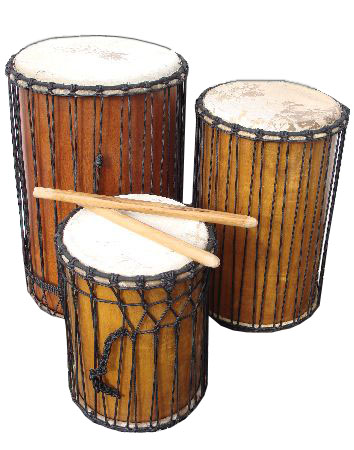
In a drumsong orchestra each drum has a responsibility. The mama drum. That’s the songba, will you say it with me? song-baa. The mama drum gets everyone to their appointments on time. It is the timekeeper. The baby drum is the kenkeni. Let’s say that together, ken-ken-ee. That drum makes us laugh, it is always doing the new and different, and the rest of the drums have to keep the kenkeni safe while it does its own thing. The grandpa drum is the junjun, let me hear you, joon-joon. It passes along wisdom, sharing longer stories. And then, the djembe. jim-bay. The first Djembe sings the main song. The bass djembe connects the song to the heartbeat. The lead djembe plays the signals to start and end the song. It is there to relate to the dancers, mimicking and cuing dance steps. The whole drum orchestra sings for the dancers so they have a rhythmic ground to dance upon.
No matter what unique song, each drum and each person brings to the symphony of life, we are all connecting through the one. We all must be faithful to the shared heartbeat. In your life, where is that which is larger than you? Where do you find the spirit of life? Where do you find that heartbeat that we all share?
Listen listen listen to my heart song (Pagan)

Each person has a unique song. You know it, you just have to remember it. In the drum song orchestra it works the same way. Your job in life is to remember your heart's song and to sing that song. Each person has their own drumsong. Each individual drumsong fits into the whole (by way of the One) to create the orchestra’s drumsong, the community’s drumsong. Each member of the orchestra has a job: Play your song.
---
It began because the drum teacher did not allow spectators. Now, after 30 years learning, performing, and teaching West African drum-song the insights, ecstasy, and depth of the tradition have inexorably changed my soul for the better.
Invite Amy to a Saturday workshop where we learn drum-songs "Oya-De", "Fanga" and "Lamba." Complete the journey with a Sunday service where we will perform these three pieces and I will share stories and lessons from my journey, from expressing joy and sorrow, to building community.

---

Sunday, September 17, 2017

"That's Primitive:" Sorting the Prerational/Transrational Fallacy

Is it "prerational", "rational", or "transrational"?

One of the most demoralizing moments in my preaching career was 15 years ago when a congregant responded to my Thanksgiving sermon (which quoted the Haudenosaunee Thanksgiving Address) with the comment "That's primitive thinking." At the time, it floored me. I was ready to read the feminist, anti-colonialist riot act at him. (I did not.) Over time I realized I didn't have a complete response to his comment. The intensity of that moment helped me see the expression of an attitude that I have found shows up in all sorts of ways. Until I grappled with that feedback I couldn't recognize the "more rational than thou" attitude in others, and more disturbingly, in myself. Until I recognized the source of that prejudice I couldn't undo it.

The age of Modernism gave us the scientific method and near worship of the rational. The Haudenosaunee Thanksgiving Address begins "Greetings to the Natural World."  Susan Griffin, in the book "Woman and Nature" talks about the separation of the world into rational and irrational and the way that men, culture, and science are identified as rational (and rightful rulers) and women, spirituality, and nature as irrational (and dangerous). A cultural story of enlightened rationality saving the world from bestial nature permeates Western literature and religion.

We see this division in colonialism - as Western culture infantilized and feminized the conquered peoples while exploiting them. We see it in my sermon critic's dismissal of Native American religion as "primitive." We see it in the reactions of many hard atheists or old-style humanists to the use of religious language in our UU congregations.

This division of the world is a brokenness that needs to be healed.

We need language of reverence. We need a relationship to a sacred earth. We need mystery. We need the gifts of insight and intuition commonly associated with women. We need embodied, body-positive, diverse, and community-oriented ways of being.

And it is right to be curious about irresponsible superstition and unthinking credulity.

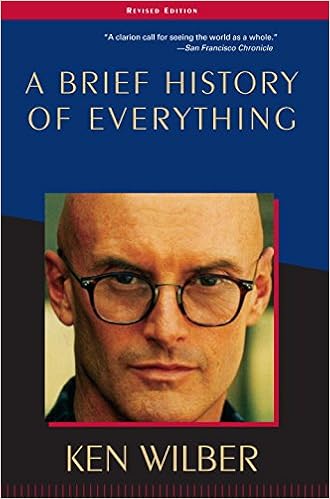
Ken Wilbur responds to these two categories with the observation that all things that don't fit into the modernist world view get lumped into the "irrational' category. He then separates that second category out into two: pre-rational and trans-rational.

He also grants that all the cautions that men of science have issued about the "irrational" state are appropriate to the pre-rational state, but not the trans-rational state. Using God to justify a system of "haves" and "have-nots", like the prosperity gospel does, is pre-rational. Unthinking belief in scripture or a literal belief in a God which results in wars, intolerance and hate are pre-rational. Superstition and unthinking credulity are the domain of the pre-rational.

When I read cultural anthropology books in the 80's the anthropologists mostly assumed that the native people they were studying were pre-rational. I picked up an anthropology book recently, however, and was pleased and surprised to read that the scientist recognized that the people he was studying had an excellent grasp of scientific concepts, cause and effect, and the nature of the natural world AT THE SAME TIME they spoke about these things in terms of story and myth. These "primitive" people were able to have nimble enough minds to understand reality on two levels at once: the mythical and the rational. Wouldn't it be grand if we modern Westerners had such skill?

The Thinking Mind... And?

On Sunday morning, many Unitarian Universalist children chant a welcoming song that expresses pride that they are part of a church that welcomes the thinking mind. It has been a point of pride for many that our religious communities don't ask folks to follow prescribed beliefs. Many identify as "religious humanists" or "religious naturalists." Indeed, many of the most brilliant scientific minds of our age are very religious and speak about their scientific observations with mystical, mythical, poetry.

"Trans-rational" living encompasses the rational, plus goes beyond it. This is spirituality that does not conflict with science. So, I say to my sermon critic of 15 years ago, "free yourself from the pre-rational/trans-rational fallacy! Open yourself to the gifts of trans-rational spiritual insight. I invite you to listen to the Haudenosaunee Thanksgiving Address again. This time without fearing that your rational mind is under threat. Bring your thinking brain, and join it with your feeling heart and spirit."

Panentheism

As an earth-relating person I spend a lot of time in the Pagan community where I've experienced many who suffer from the opposite aspect of the pre/trans fallacy. To them I send an earnest request: please bring your rational brain. We do not need to toss it out in order to experience the gifts of the trans-rational. And when we take an "anti-rational' attitude we throw out all the gifts of the modern era. As we move into post-modernism, we need to build, not tear down.

Psychologist Lawrence Kohlberg wrote about the stages of moral development. In them we move from an undifferentiated "might makes right" to a differentiated "rules tell me what is right" to a relational "ethics tell me what is right". My experience with human beings is that we move through these stages over and over, in a spiral pattern, each time learning them more deeply.

Both/And

I believe that spiritual development is very similar, moving from the undifferentiated "I'm a believer" to the differentiated "scientific proof arbitrates reality" and on to the relational "both/and of rational mind in a dance with spiritual insight".
-------
I invite you to dance in the transrational with me!
My colleague Catharine Clarenbach also has written on the transrational.

Sunday, September 10, 2017

The Fool's Magic

"Laughter is the shortest distance between two people."
Victor Borge 
“Humor must not professedly teach and it must not professedly preach,
but it must do both if it would live forever.”
Mark Twain 
"Humour is the weapon of unarmed people: it helps people who are oppressed
 to smile at the situation that pains them.”
Simon Wiesenthal 
"If you can’t cry you might as well laugh."
My Spouse

Almost everyone, all over the world, grew up with trickster stories: Myths and folklore about a deity, spirit, human hero or human-like animal who plays pranks or disobeys normal rules and conventional behaviour. Tricksters have many names: Raven, Coyote, Anansi-the-Spider, Eshu-the-Orisha and the Fool.

I've been studying Tarot cards since I was 15 years old and was given a deck as a gift. At Lewis and Clark College, where I earned my Bachelor of Arts degree my senior thesis presentation was on the Tarot. One of my favorite cards is the Fool card. In the 1454 Visconti-Sforza deck that card is portrayed as a destitute vagabond. In the 1465 Mantegna deck the fool is labeled "the miserable". In these early decks the fool is often shown with feathers in the hair, which probably symbolizes a lightness of mind. The tarot fool is the one who is unconcerned with the misery of life, the embarrassment of inadequate clothing and the weight of possessions.

The fool has transformed into the joker in our current card decks and is often depicted as a court jester. In many decks there is a small dog nipping at the fool's heels, which traditionally represented the rule-enforcement driving the "otherness" of the fool away from polite society. The wild energy of the trickster creates little ‘air-pockets’ in which rules can be bent, maybe even broken, and in which we can let our sense of self breathe a little differently. In doing so, we energize the world.

The child is often the sacred clown. When I learned West African Drumming I learned the three bass drums. They are referred to as the Songba or Mama drum that keeps everyone on time, the Djun Djun or Grandfather drum that occasionally jumps in with something interesting or wise to say, and the Kenkeni or Baby drum who creates a rhythm that skips joyfully across the other rhythms, and is what actually makes the whole thing interesting! When I play those rhythms it tickles my brain and soul and stretches my ability to hear and feel.

Perhaps the quiet challenge now is to invest aspects of our lives with the fluid thinking of the trickster figure, the baby drum, the child, or the sacred clown.

Vicki Noble, in her book "Motherpeace," describes the fool card as "Trusting one's elf." It can be read as trusting "oneself" or as trusting "one's elf." The fool can hold multiple meanings at once!

In the Tarot deck, the number of the Fool card is zero. It is usually a picture of a young person, with a small pack on their back, eyes on the open space before them, about to step off a cliff.

In a Tarot reading, the Fool invites us to consider foolish, impetuous aspects, to boldly travel on the journey of life, our own fool’s journey. The fool embodies our confrontation with the big questions that we must face in our lives.


Tarot of the Cloisters - Fool Card
The fool asks questions: What am I supposed to be doing? What is the most important thing? Can I trust my heart's messages?

It is scary taking a new road, it is scary flipping our perceptions upside down, and it is scary to admit that we don’t really have it all together. In the Harry Potter movies Harry and his friends learned a spell to deal with something scary. The spell’s name is “Riddikulus”. For instance a boy who is afraid of spiders imagines the spider trying to balance on roller skates. It’s a “trick” that results in bravery.

The fool can make us brave, the fool can trick us into seeing new perspectives, the fool can open our minds... even open our minds to the answers we seek.


And that feeling of your mind opening? That is magic!

------------------
Interested in a Tarot Card Reading? http://www.northstartarot.info/

Sunday, September 03, 2017

Rise and Shine

Rise and shine and give God the glory glory, Children of the World.*
I sang this in Sunday school when I attended the First Congregational Church of Corvallis Oregon as a grade-schooler.

Its a cute song. But I did wonder about a God who would send a flood to kill almost everyone off.

Now that I'm a Unitarian Universalist I know that the divine love that I hold holy would never do such a thing. But this week I was reminded of the song, and the feeling of forces beyond our control causing loss and pain. It was a sort of ironic counter-melody running through my head as I read the news about hurricane Harvey.

Global climate change is an unforgiving "God". One we have created or helped create. But it is not important to know who to blame. It is important to know how to respond. All of us are in this boat together.

Get those children, out of the muddy muddy
https://www.youtube.com/watch?v=0SauNUEw_OU
Yes, hurricanes and storms and floods are causing far more damage and loss of life than ever before. Scientists agree that the storms are getting somewhat worse, but the effects of the storms, due to population, construction, and more, are more serious.

They aren't just in Houston and New Orleans (the 12 year anniversary of Hurricane Katrina was August 29), but Japan, India, and Caribbean islands have been hit by extreme weather disasters as well. Not to mention the competition for resources that has resulted in death and suffering for millions in Yemen, Sudan, and similar countries. And then there's the heat and drought... from California to Turkey. Then, right here in my backyard in Oregon and Montana... fires...

In recent weeks we've encountered other kinds of storms. The white-supremacist culture that has grown interwoven with the history of America is another kind of storm. It too kills, damages, creates loss and pain. It, too, is predictable for those who are watching. It too, shows up in small, ignore-able forms and large, dangerous forms. From changing rainfall patterns, to killer hurricanes. From micro-aggressions to neo-Nazis.

God said to Noah build me an arky arky...
The image of the young man (looking at the photo he looks maybe 11 years old) in his kayak ferrying bedraggled dogs across the flood in Houston reminded me of Noah. Noah, saving the animals.

And who is Noah today, ushering each being in need onto the boat? Remember what Mr. Rogers has said about responding to crises? "Look for the helpers." Yes, look for the folks on the boats, helping others. Yes, look for the folks showing up to say "No" to tiki-torch-waving fascists.
https://itsnothouitsme.com/2017/08/29/how-to-
volunteer-at-convention-center-harvey-houston/
There is a picture going around of several hundred people standing in line in the rain on Tuesday, to get into the George R Brown Convention Center in Houston. What is this line is for? Water? Food? Housing? No! These people are waiting in line to VOLUNTEER!

Who is My Neighbor?
And I remembered the conversations I had with a tenant many years ago. Ranjeet was from India. He was asking hard questions of me. I was describing my fascination with a future space station. He described the sick and dying and malnourished and oppressed people who were his neighbors back home.

Since then I've become aware of the sick and dying and malnourished and oppressed people who are MY neighbors here at home. The people who are hardest hit when a natural disaster occurs. the people living in the buildings with the least compliance with building codes, closest to the factories and dumps full of toxins, the people without the resources to pay for insurance, or access to a car to drive to a safe hotel.

Water Communion
Traditionally, congregations in my movement celebrate a ceremony of coming back together in September. We call it the "Water Communion" ceremony and we mingle the waters from our summers, and our individual lives, into one container during the worship service.

What is important to me about this ceremony is that it is a reminder that we are all connected in community. It takes all of us to make the sacred water. It takes us coming together with intention to create the community that will sustain us through the year.

Each one of us contributes our part. Each one of us needs to shine our own light. Each one needs to show up in our own way. When we do that the way is made easier. When we do that we can clean up a mess like the aftermath of Hurricane Harvey, or global climate change, or racism. Showing up to shine may mean donating dollars. Showing up to shine may mean creating symbolic rituals that inspire others and create community feeling. Showing up to shine may be pulling out a lifeboat and paddling to rescue an exhausted puppy. When we are looking for the helpers, sometimes we are the ones getting helped, and always, we are the helpers. We are the ones we are waiting for. We can rise and shine. We can give all our glory.

---
*I tend to look for a substitute for the word "lord" in songs when I can.